
If you have been running for any length of time, you have likely run into the great conundrum faced by all runners at some point: to run or not to run with a cold. As cold weather settles in, maintaining your health matters a lot. It turns out, how you treat your body is more important than the decision to run in a long sleeve or a short-sleeved shirt.
Personally, I would not let anything short of a broken limb or hospital stay keep me from running a race I have trained for. Fortunately (or not), I have made several of the rookie mistakes that sick runners make, so a few of those lessons are mixed in below.
Winter dinner is the other half of taking care of yourself, in my book. Most of these go in the slow cooker in the morning and are ready when you come in from a cold, dark run (or from the couch, no judgment). There are several of them here, from short ribs and pozole to chicken soup, a pot of hot chocolate and an eggnog bread pudding.
Irish Beef Stew
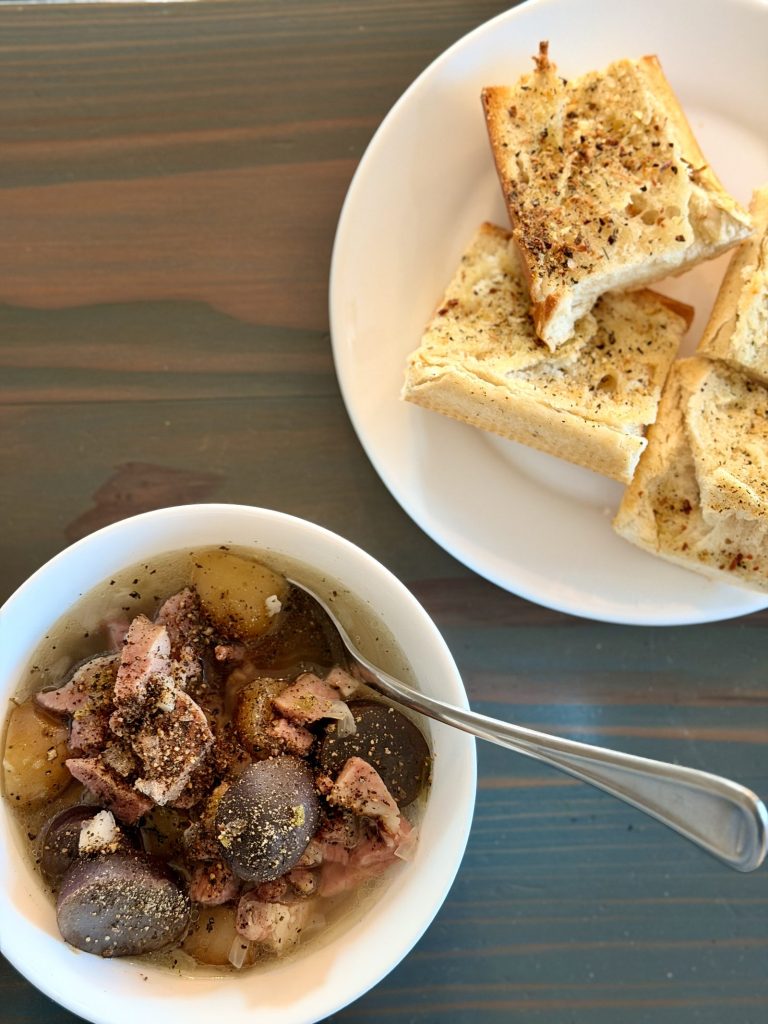
Chuck roast cut into big cubes, tossed in flour and browned in batches, then into the cooker with potatoes, carrots, onion, a spoonful of tomato paste, thyme and a bottle of Guinness topped up with beef broth. Give it 8 hours on low.
Cut the carrots and potatoes bigger than you think you need to. They have all day, and they should still hold their shape in the bowl like the ones here. Toast for the gravy is optional, though in my book it shouldn’t be.
Chicken Soup With Rosemary and Lemon
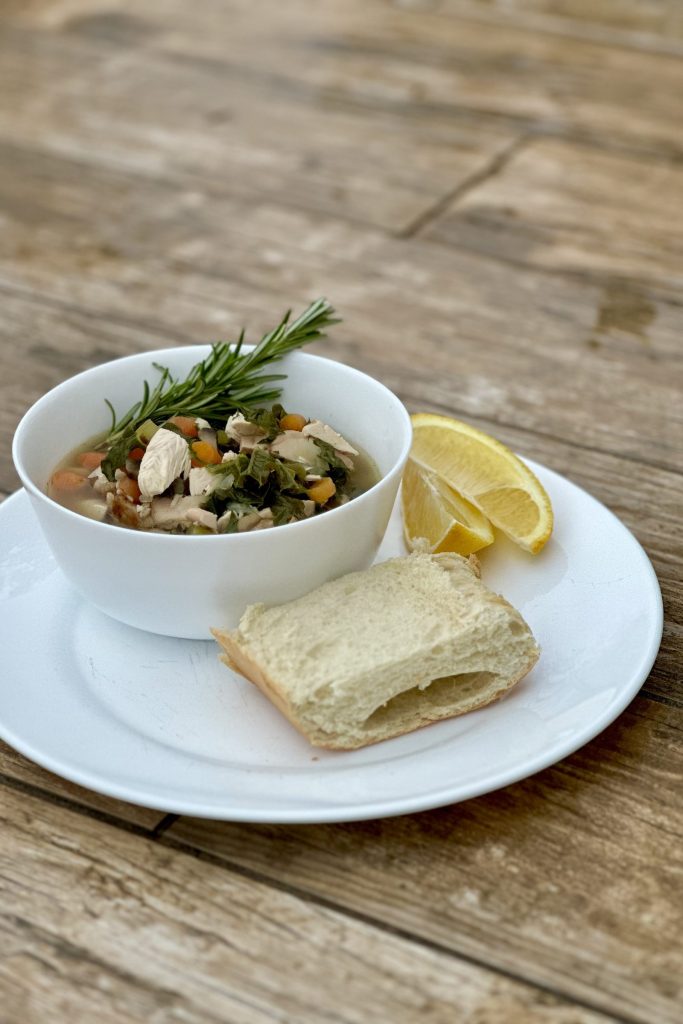
Bone-in chicken thighs, carrots, celery, onion and a handful of chopped greens, covered with broth, with a couple of rosemary sprigs tucked in. About 7 hours on low.
Pull out the bones and the rosemary stems, shred the meat back into the pot, and squeeze a lemon wedge over each bowl. A torn piece of bread on the side, like the plate here, is about all the ceremony a weeknight needs.
Running When You Feel Run Down
Running while sick with a cold definitely comes with its list of dos and don’ts. Here is what Jonathan C. Crist, M.D. had to say on the subject:
“With respect to athletes and respiratory infections, we talk about performing a ‘neck check.’ If symptoms exist above the neck (e.g., runny nose, congestion, sore throat), we usually recommend a trial of exercise at half intensity for 10 minutes and continue as tolerated if symptoms do not worsen.” He also recommends increasing caloric and fluid intake slightly, so you are not burning the candle at both ends.
If symptoms exist below the neck (fever, fatigue, severe cough, stomach symptoms), there should be no exercise. Like your mom always told you, better safe than sorry. You cannot sweat out a fever.
If you do run with a cold, take it in stride. Plan on a slower pace and hydrate more than you normally would. If you feel dizzy, feverish or tight in the chest, stop and get checked out.
Meatballs in Marinara
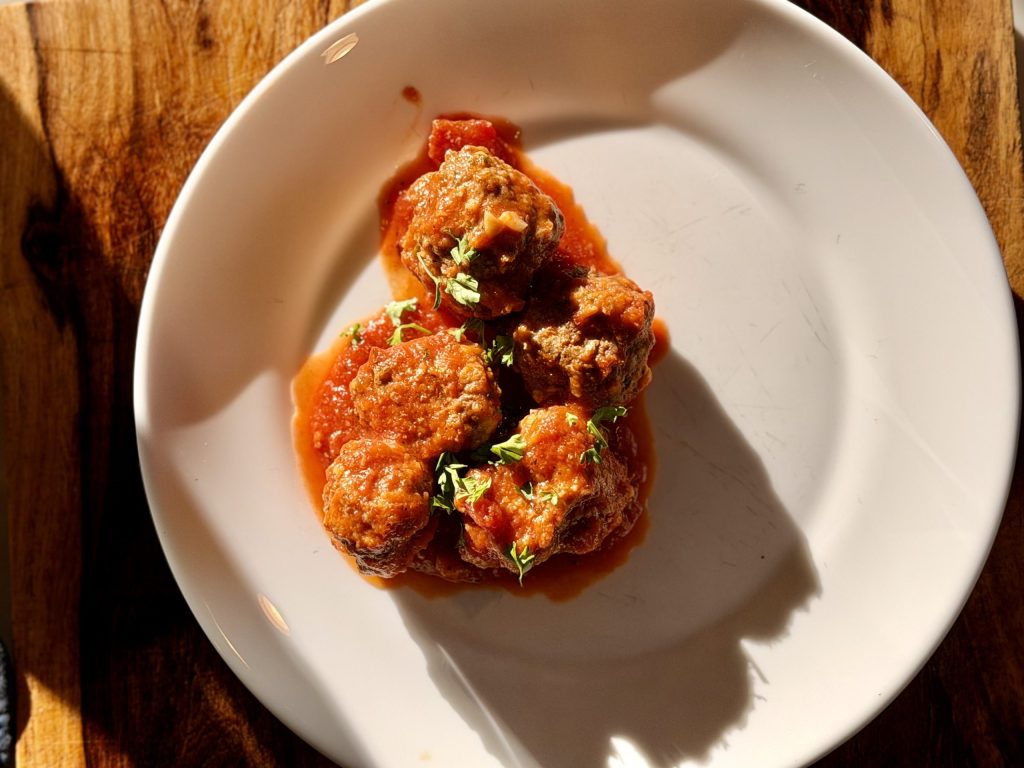
Meatballs are one of those things a slow cooker handles without much help from you. Brown homemade beef and pork meatballs in a skillet first (or use fully cooked frozen ones that have thawed in the fridge), then bury them in a jar or 2 of marinara with extra garlic and a few torn basil leaves. About 4 hours on low.
If you started from raw, check the center of the biggest one for 160°F. Pasta, a sub roll, or just a plate and a pile of parmesan like this one.
Short Ribs With Mashed Potatoes
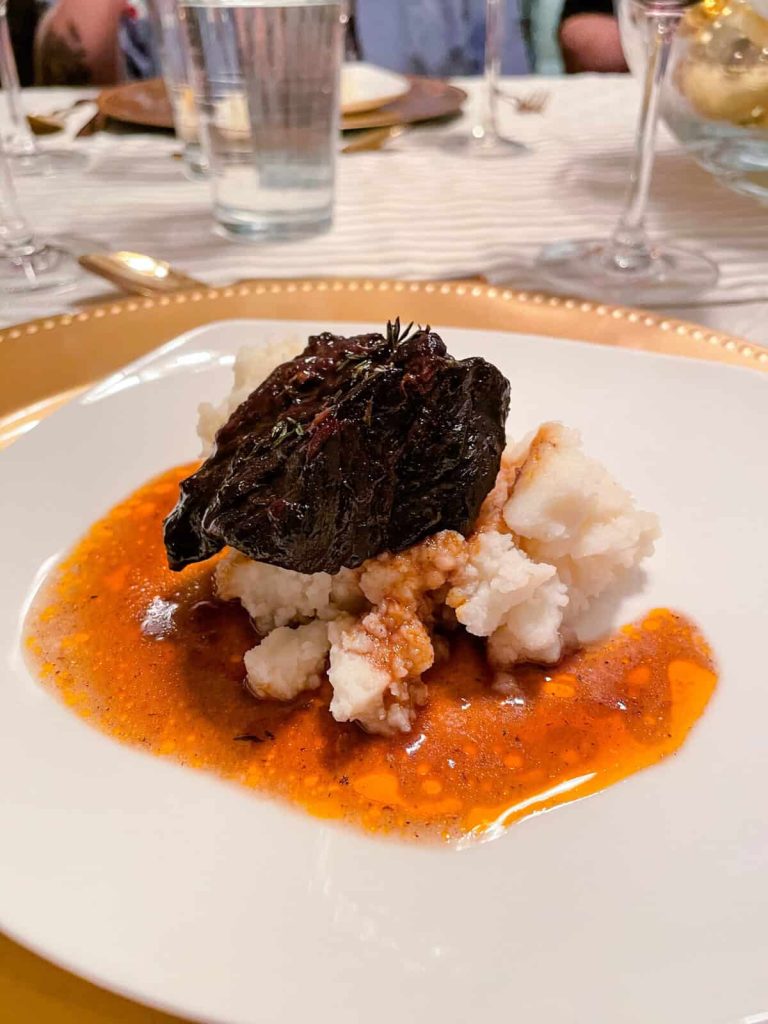
Short ribs are about the most forgiving cut you can put in a slow cooker. Sear them dark, then braise them in beef broth, a little red wine, garlic and onion for 8 hours on low, until the meat is barely hanging onto the bone.
Skim the fat off the liquid and spoon it over a mound of mashed potatoes, the way this plate does it. If there are extras, cooked meat keeps 3 to 4 days in the fridge and 2 to 6 months in the freezer, according to the FoodSafety.gov cold storage chart.
Tuscan Sausage and Bean Soup
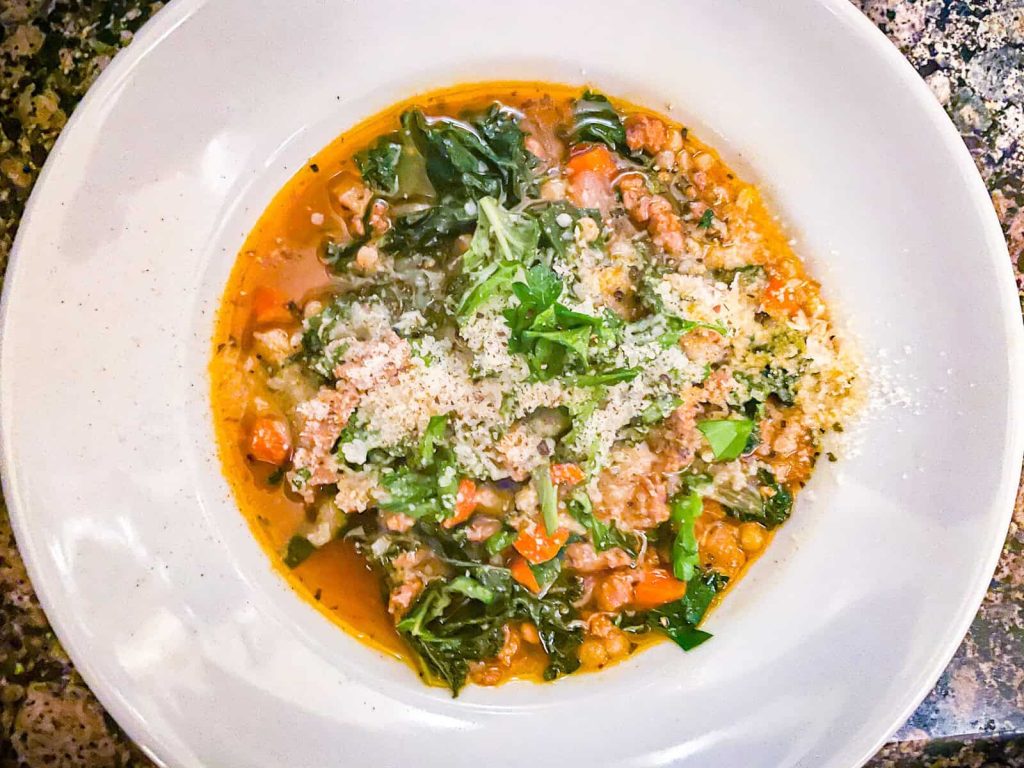
Crumbled Italian sausage, 2 cans of cannellini beans, diced carrots, onion, garlic, a can of tomatoes and chicken broth, all in together for 6 hours on low. Chopped kale or chard goes in for the last half hour. I like a lot of parmesan on this one.
Beef Bourguignon
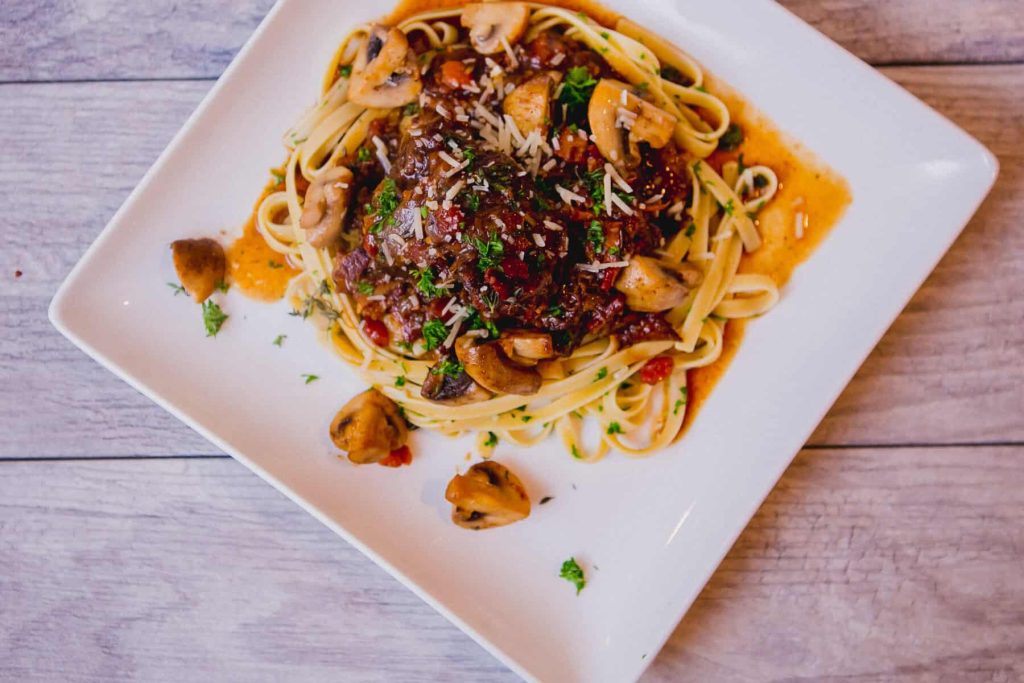
The French classic, minus most of the babysitting. Brown chunks of chuck roast with a few strips of chopped bacon, then into the cooker with mushrooms, pearl onions, carrots, garlic, thyme, a couple of cups of red wine and enough beef broth to nearly cover. Give it 8 hours on low.
It comes out richer than a regular beef stew. I’d spoon it over wide egg noodles rather than potatoes, which is how it’s served here.
Pozole Rojo

Pork shoulder in chunks, a couple of cans of hominy, and a red chile sauce made from soaked guajillo and ancho chiles blended with garlic, oregano and broth. After 8 hours on low the pork shreds with a fork.
The usual toppings are shredded cabbage, radishes, lime and more oregano. This bowl went the cheddar and cilantro route, which I won’t argue with.
Loaded Baked Potato Soup
Diced russets, onion, garlic and chicken broth for 6 hours on low, then mash about half of it right in the pot and stir in cream cheese and a little milk. The toppings are the whole point: bacon, cheddar, sour cream and green onion.
It makes a big batch. FSIS says to get slow cooker leftovers into the fridge within 2 hours of the cooking being done, so don’t leave the pot sitting on warm all evening.
If you aren’t running a marathon in Antarctica, then you probably won’t need a heavy-duty running jacket. Runners should select a jacket to fit the type of cold they will run in, and for an everyday winter run that means something breathable, wind and water resistant, light, and reflective for the dark mornings (here’s a search for reflective running jackets on Amazon).
Mongolian Beef
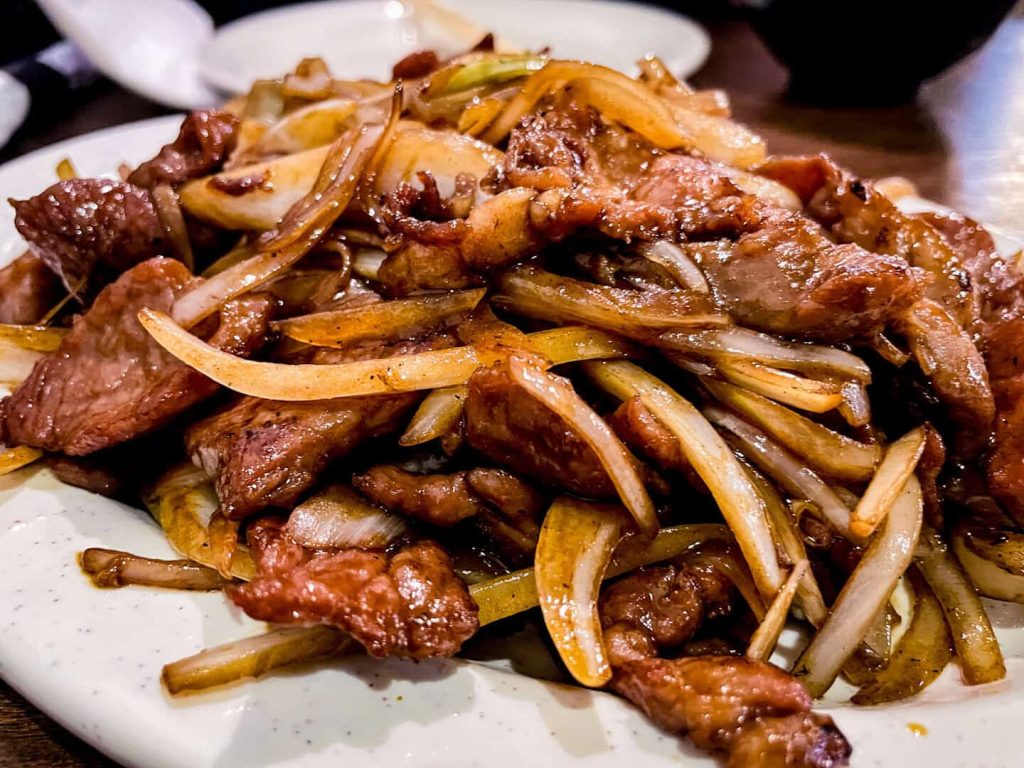
Flank steak sliced thin against the grain and tossed in cornstarch, then soy sauce, brown sugar, garlic, ginger and a little water poured over it. It cooks faster than most things on this list, 4 to 5 hours on low.
Add thick strips of onion for the last hour so they soften but hold their shape (I’d use 2 big onions, not 1). Rice and some steamed broccoli.
Green Pea Soup

Frozen peas, an onion, a potato for body and vegetable broth. The onion and potato need about 4 hours on low, but the peas only need the last 30 minutes, and they stay bright green that way. Blend it smooth and finish each bowl with a swirl of cream and a pinch of chile flakes, like this one.
Chicken and Dumplings
Chicken thighs, onion, carrots, celery and a can of cream of chicken soup (or broth thickened with a little flour) for 6 hours on low. Shred the chicken in the pot.
Then tear refrigerated biscuit dough into pieces, drop them over the top, put the lid back on and switch to high for about an hour, until they’re cooked through in the middle. No stirring while they cook.
Lentil Soup
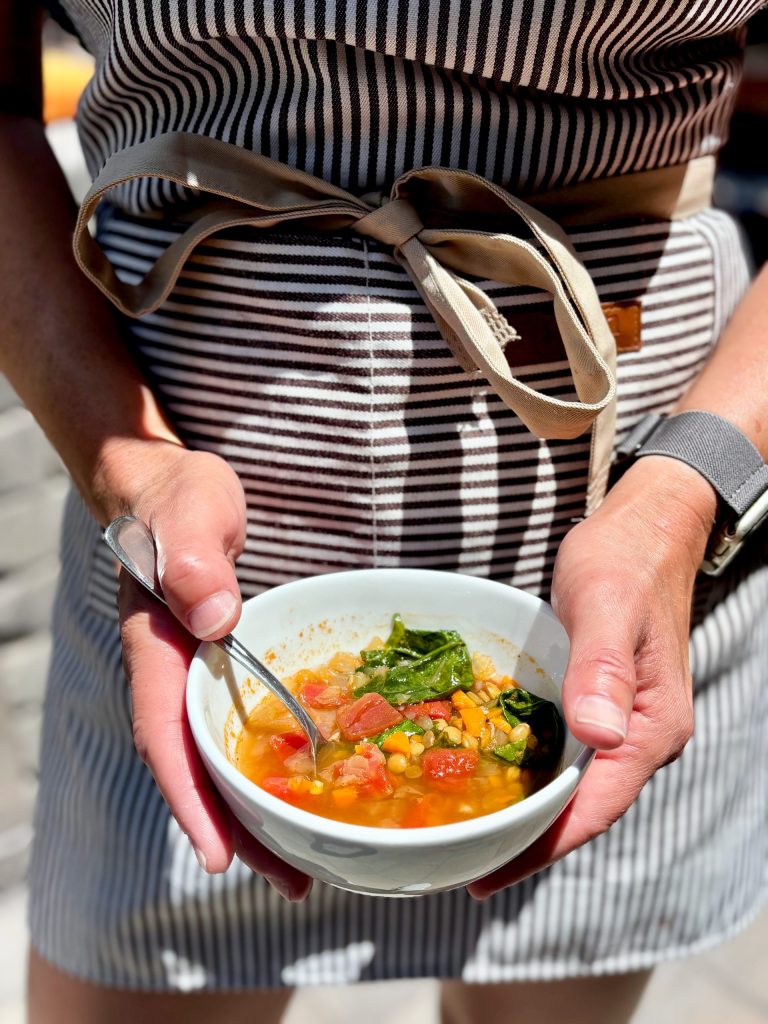
Lentils are the one dried bean you don’t have to soak, so this takes about as little planning as anything here. Rinse a pound of brown or green lentils and put them in with diced carrots, celery, onion, garlic, a can of diced tomatoes, a spoonful of cumin and about 8 cups of broth. Low for 7 to 8 hours, or high for about 4.
A couple handfuls of spinach and a squeeze of lemon go in right before serving, which is how the bowl here got its green. It thickens as it sits, so thin the leftovers with a splash of broth when you reheat them.
French Onion Soup

Slice 4 or 5 big yellow onions thin, toss them with butter and a pinch of salt, and let the slow cooker do the caramelizing, 8 to 10 hours on low with the lid cracked for the last few. It takes forever on purpose. Then beef broth, a splash of sherry or white wine and some thyme go in for another hour or 2.
Float a thick slice of toast on each bowl and melt Gruyère over it under the broiler. The bowl here skips the cheese and goes with toast and parsley, which isn’t a bad shortcut on a weeknight.
Creamy Tomato Sausage Soup
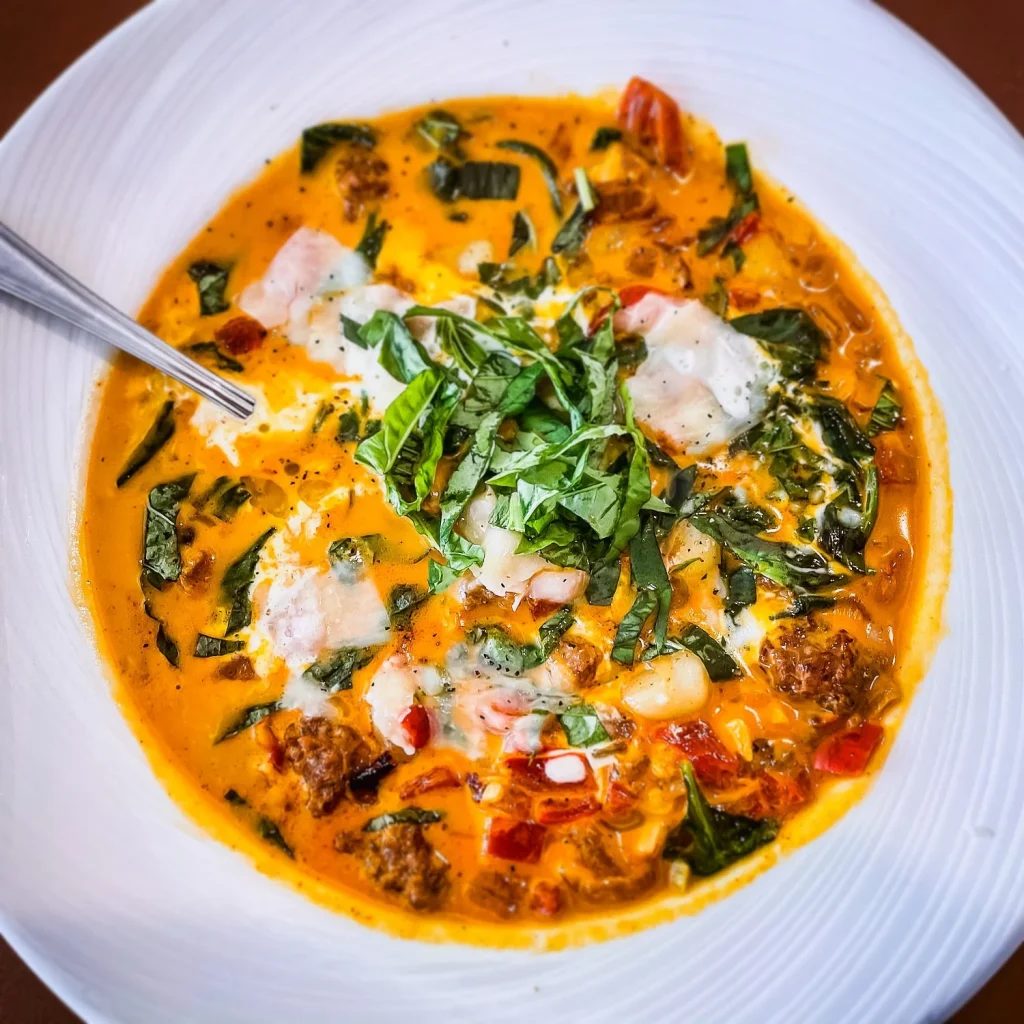
Crushed tomatoes, browned Italian sausage, a diced red pepper, onion and broth, 5 to 6 hours on low.
Stir in heavy cream and a few handfuls of spinach at the end, then leave the lid on for 10 minutes. Torn basil on top. Small mozzarella pearls melt into soft little pockets, if you want to go that way.
Bean and Vegetable Soup
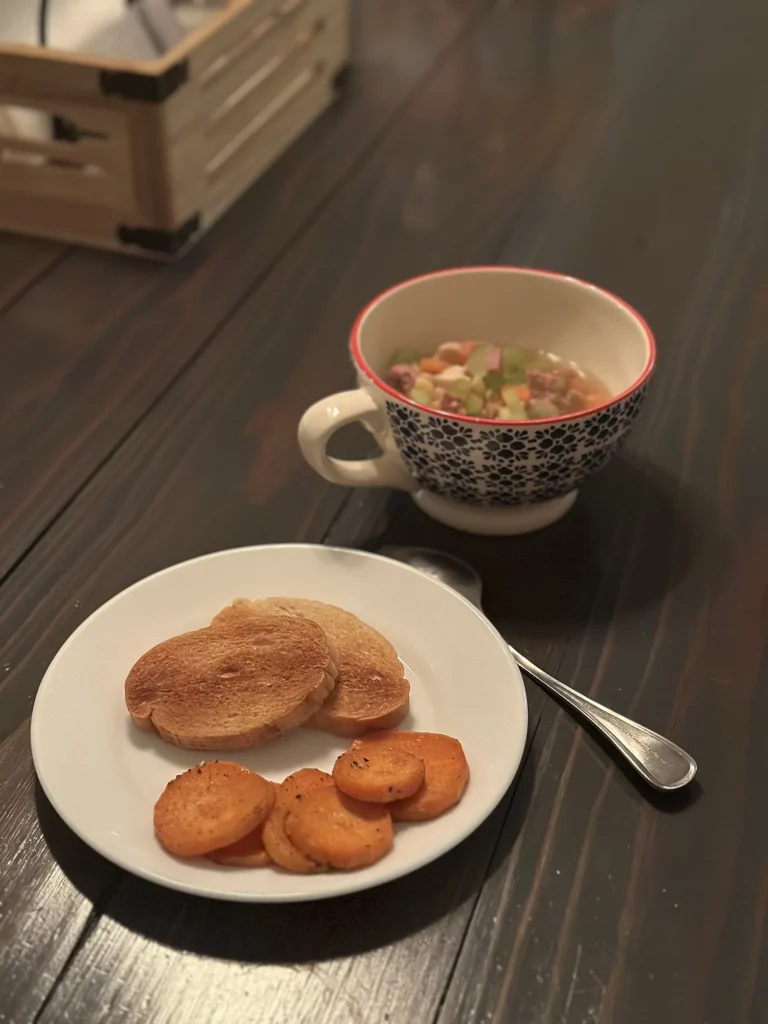
Dried great northern beans, soaked overnight, with carrots, celery, onion, garlic and a bay leaf in broth. It takes about 8 hours on low for dried beans to go fully tender, and some chopped parsley at the end helps.
Serve it in a mug with toast and a few roasted sweet potato slices, which is how it shows up here.
Living in Washington state, the time the sun goes up and down changes drastically from summer to winter, and by December it’s often still dark at 7 a.m. and dark again before 5 p.m. So I typically resign myself to the treadmill for most of December and January, since I just like to be in a heated room rather than out in the freezing cold and darkness. If you’re shopping for one, here’s a home treadmill search on Amazon.
Cabbage and Sausage
Wedges of green cabbage, sliced smoked sausage (kielbasa is my pick), onion, a few small potatoes and a cup of broth with a splash of cider vinegar. Low for 5 to 6 hours. It’s cheap, it reheats well, and it doesn’t need a side.
Classic Beef Chili
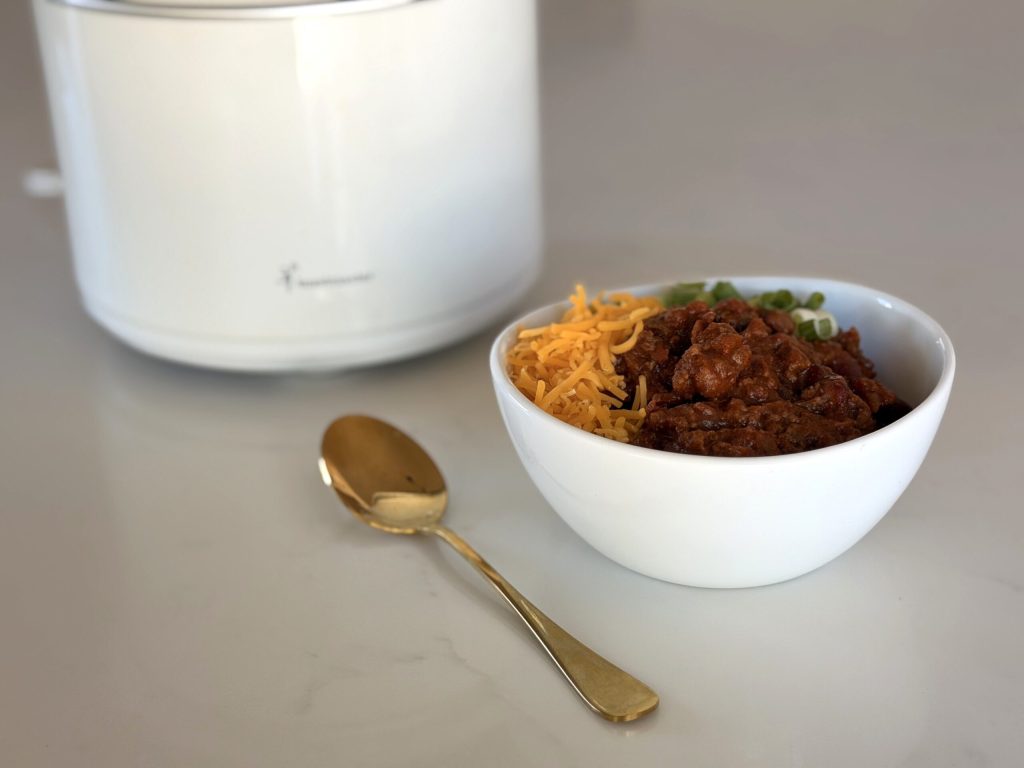
Brown 2 pounds of ground beef with a chopped onion and drain the fat, then into the cooker with kidney beans, a big can of crushed tomatoes, a little tomato paste, garlic, chili powder and cumin. Low for 6 to 8 hours. Ground beef needs to reach 160°F, and it gets there long before the chili is done.
The cooker sitting behind the bowl in this photo is the whole method. Shredded cheddar on top, and it freezes well in portions if you made more than you need.
Chicken Gnocchi Soup
Chicken breasts, carrots, celery, onion and garlic in broth for 5 hours on low. Then shred the chicken and add shelf-stable gnocchi, half and half and a couple of handfuls of spinach. Another 30 minutes on high and the gnocchi turn soft and pillowy. Any longer and they start to fall apart.
Vegetable Soup With Kale and Carrots
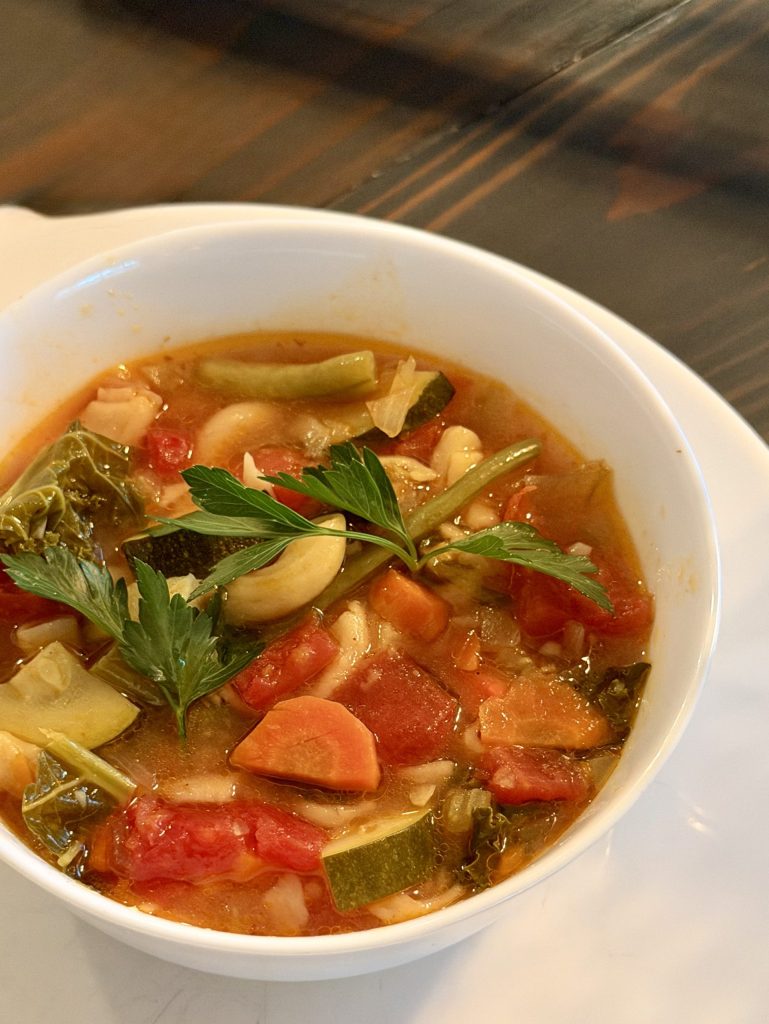
This is the one for when the vegetable drawer needs clearing out. Carrots, onion, celery, potatoes, diced tomatoes and white beans in broth for 6 to 7 hours on low, with the root vegetables on the bottom, then a big bunch of chopped kale for the last 30 minutes.
The bowl here has small pasta shells in it too. Cook those separately and add them per bowl, since pasta left in the crock all day goes soft and soaks up the broth.
Honey Glazed Ham
A fully cooked spiral ham frees up the oven on a holiday. Set it cut side down in the cooker (trim it if the lid won’t close), pour a glaze of honey, brown sugar, Dijon and a pinch of ground cloves over the top, and give it 4 to 5 hours on low. Spoon the juices back over it once or twice.
Garlic Mashed Potatoes
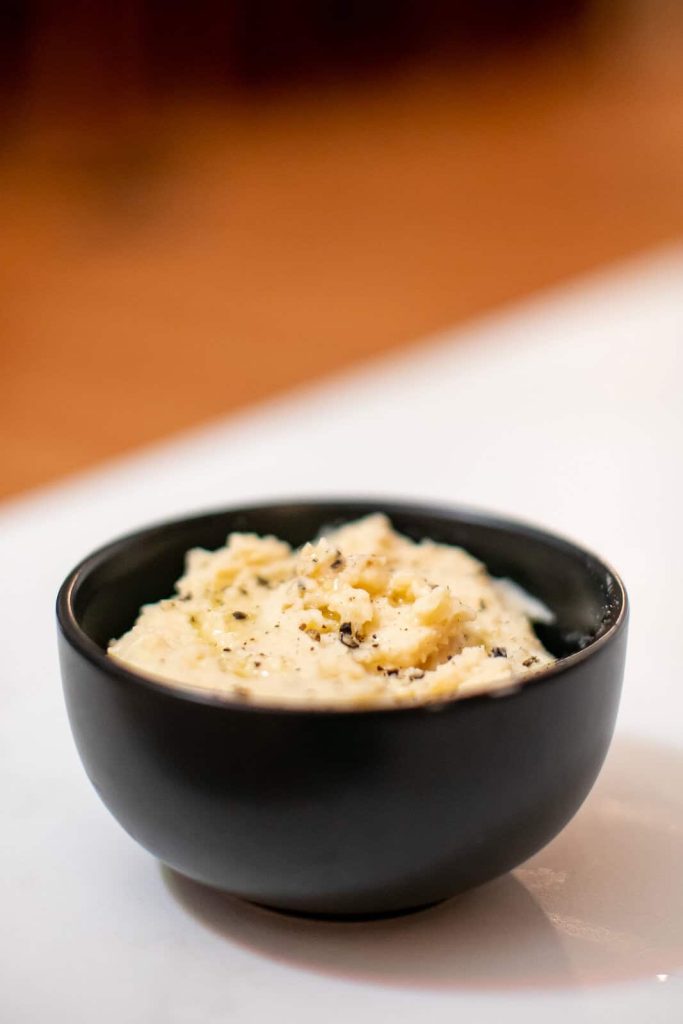
Potatoes in chunks with a whole head of garlic, peeled, and enough broth to come about halfway up. High for 3 to 4 hours. Drain off most of the liquid, then mash with butter, sour cream and black pepper; the garlic goes soft enough to mash right in.
Baked Beans
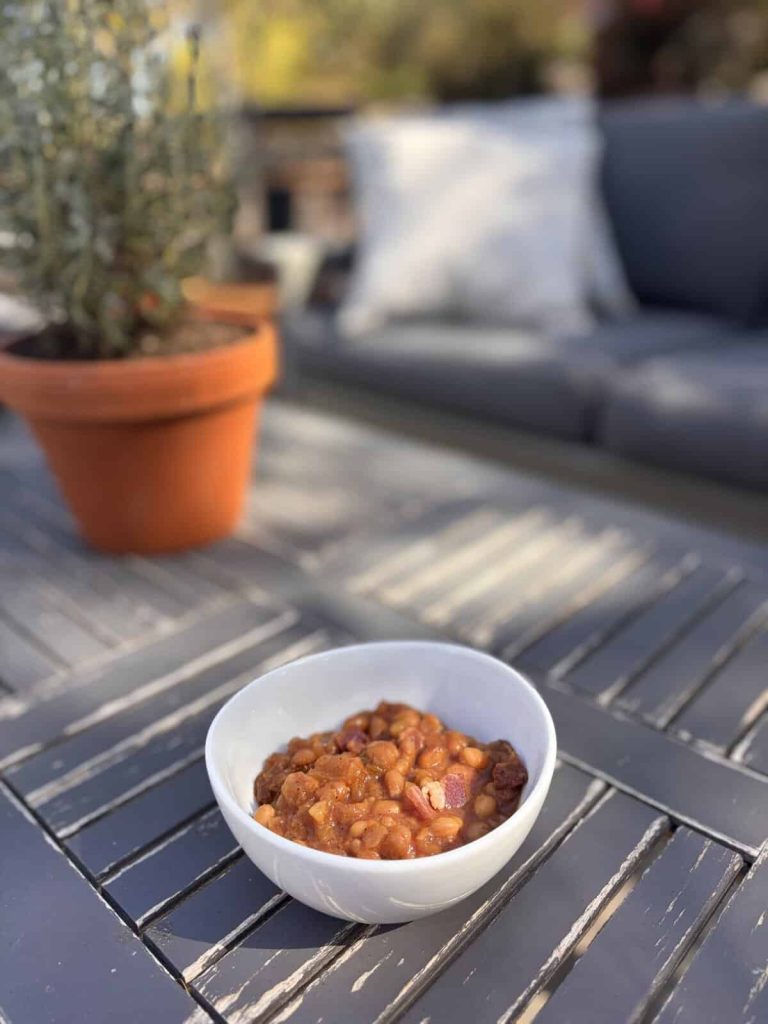
Navy beans soaked overnight and boiled for 10 minutes, then into the cooker with diced bacon, onion, molasses, brown sugar, ketchup, mustard and enough water to cover. They need a long time, 8 to 10 hours on low, and they thicken up if you take the lid off for the last hour.
Bacon is optional, sort of. I wouldn’t skip it.
Hot Chocolate
Whole milk, a cup of heavy cream, chopped semisweet chocolate, a few spoonfuls of cocoa powder, sugar and a splash of vanilla. Low for 2 hours, whisking every half hour so nothing settles on the bottom, then switch it to warm and let people serve themselves. A pinch of salt makes it taste more like chocolate.
When Cold Air Makes Your Throat Hurt
Running in cold air isn’t only hard on your muscles, it also puts a lot of stress on your throat. Our noses have a lot of tiny blood capillaries that help warm cold air as it enters our lungs, but if the air is too cold outside, that may not be enough to warm it before it reaches your throat. Dry winter air draws moisture out of the lining of your throat, too. A few things that help:
- Breathe through your nose when you can. Your nasal passages are much better suited for warming and moistening the air than your mouth is.
- Make sure you’re hydrated before running, so your throat lining stays moist and doesn’t get scratchy.
- Wear a neck gaiter or a winter scarf to keep your airways warm.
- Drink warm liquids such as herbal tea afterward.
In most cases, a sore throat will heal on its own in around 3 to 5 days. However, if the throat pain comes with a high fever (above 100°F) or you’re not able to sleep because of it, visit your doctor.
Eggnog Bread Pudding
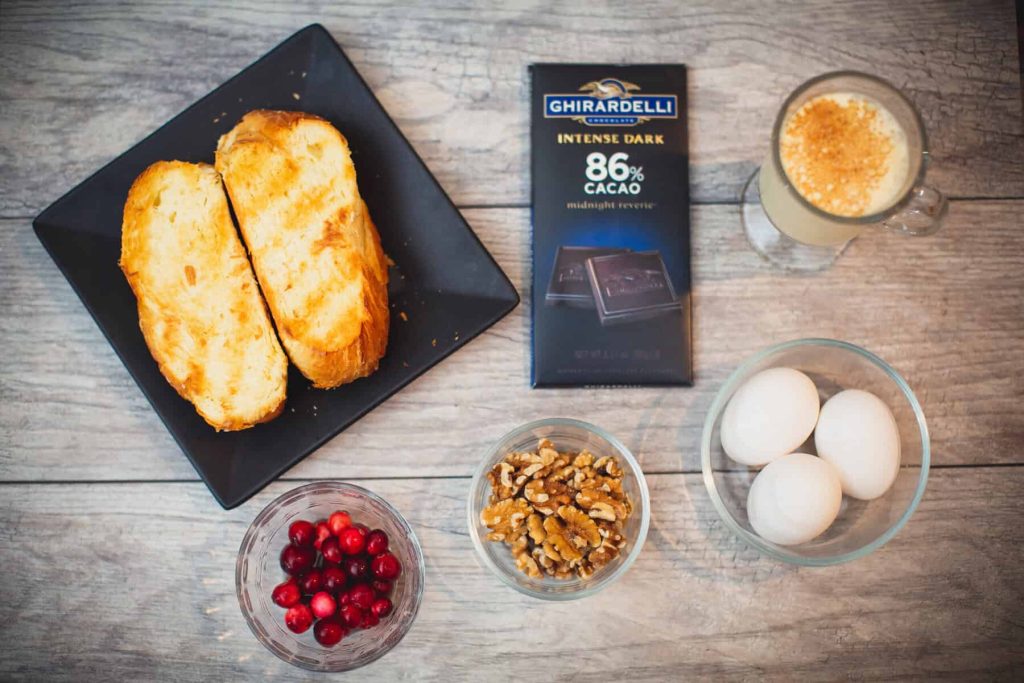
A slow cooker dessert that uses up stale bread. Cube a day-old loaf, then soak it in eggnog whisked with 3 eggs and a little cinnamon. Fold in cranberries, chopped walnuts and some chopped dark chocolate, the same lineup laid out above, and cook it on low for about 3 hours, until the center is set.
It’s an egg dish, so the middle should read 160°F, per the FSIS safe temperature chart.